
Radiation protection officer training is a mandatory requirement for professionals responsible for radiation safety in healthcare, industrial, and research facilities across the UAE. Organizations operating X-ray machines, nuclear medicine equipment, radiotherapy units, or industrial radiography systems must appoint a certified Radiation Protection Officer (RPO) to comply with national regulations and international safety standards.
This guide explains everything you need to know about radiation protection officer training in the UAE, including eligibility requirements, certification process, course structure, career opportunities, and why proper training is essential for regulatory compliance.
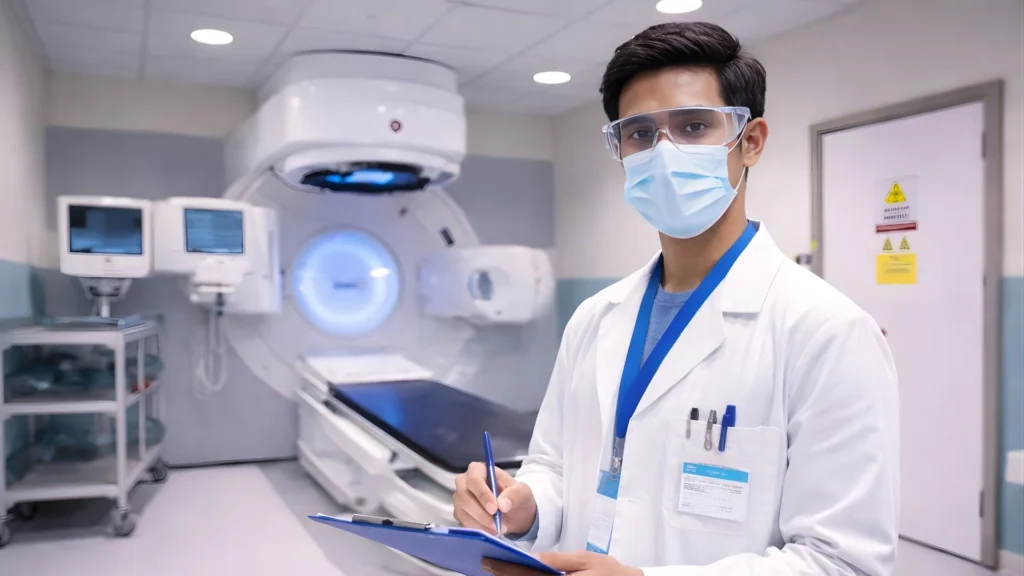
Radiation protection officer training is a structured professional program designed to equip individuals with the knowledge and skills required to manage radiation safety in controlled environments. An RPO ensures that radiation exposure to workers, patients, and the public remains within permissible limits and that all radiation-emitting equipment is operated safely and legally.
Radiation protection officer training covers radiation physics, biological effects of ionizing radiation, dose monitoring, safety protocols, emergency response, and regulatory compliance. In the UAE, this training is not optional—it is a legal requirement enforced by regulatory authorities for any organization handling radiation sources.
Radiation safety is strictly regulated in the UAE due to the potential health risks associated with ionizing radiation. Government authorities require every licensed facility using radiation sources to appoint a qualified and trained Radiation Protection Officer.
Radiation protection officer training ensures that organizations meet compliance requirements set by authorities such as:
Ministry of Health and Prevention (MOHAP)
Department of Health (DOH – Abu Dhabi)
Federal Authority for Nuclear Regulation (FANR)
Failure to appoint a certified RPO can result in penalties, license suspension, or operational shutdowns. This makes radiation protection officer training a critical investment for healthcare providers, industrial companies, and research institutions.

Radiation protection officer training is required for professionals working in environments where radiation is present, including:
Hospitals and diagnostic imaging centers
Dental clinics using X-ray systems
Radiotherapy and nuclear medicine departments
Industrial radiography companies
Oil & gas inspection services
Research laboratories and universities
Even senior engineers and medical professionals must complete radiation protection officer training if they are designated as the responsible safety authority within an organization.
Most radiation protection officer training programs require candidates to have a relevant academic background such as:
Medical physics
Radiography or radiologic technology
Engineering
Physics or applied sciences
Candidates are typically expected to have prior working with radiation-emitting equipment or within regulated facilities. This ensures trainees can apply safety principles effectively in real-world environements.
A standard radiation protection officer training program in the UAE includes:
Fundamentals of radiation physics
Types of ionizing radiation
Biological effects and health risks
Radiation dose limits and monitoring
Radiation protection principles (time, distance, shielding)
Equipment safety and quality control
Radiation risk assessment
Emergency preparedness and incident response
UAE radiation regulations and compliance procedures
This comprehensive curriculum ensures that trainees are fully prepared to handle both routine operations and emergency scenarios.
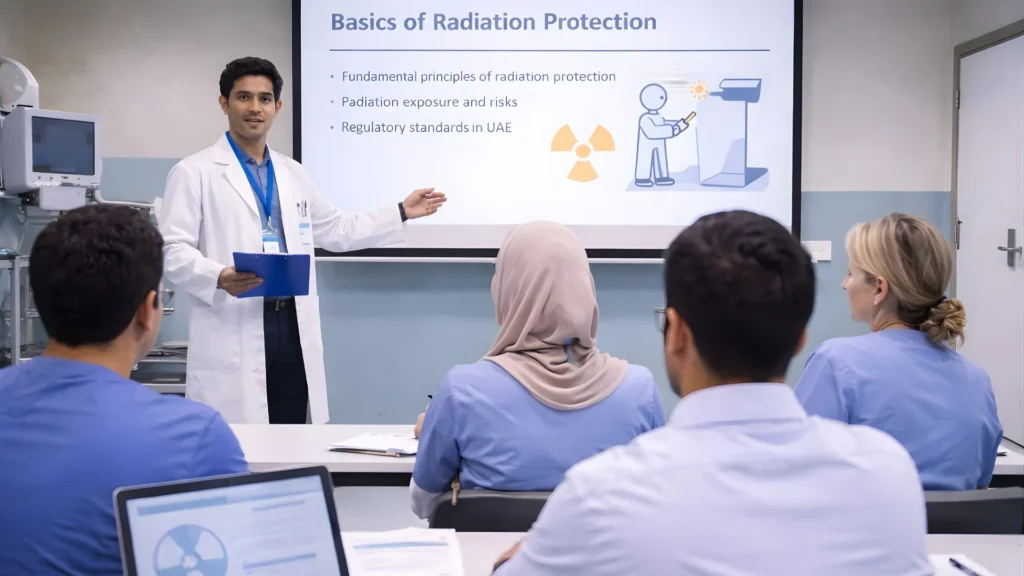
After completing radiation protection officer training, candidates must:
Attend all required training sessions
Pass the final assessment or examination
Receive an official certificate of completion
This certification is used to:
Appoint the individual as Radiation Protection Officer
Submit to regulatory authorities for facility licensing
Demonstrate compliance during inspections
Certified professionals may need periodic refresher training depending on regulatory updates.
Radiation protection officer training opens multiple career paths in the UAE, including:
Radiation Protection Officer (Healthcare)
Radiation Safety Officer (Industrial)
Medical Physics Assistant
Quality & Compliance Officer
Radiation Safety Consultant
Certified professionals are in high demand due to strict regulatory enforcement and expanding healthcare and industrial sectors
Medrad provides industry-recognized radiation protection officer training designed to meet UAE regulatory requirements.
Key advantages include:
Expert instructors with field experience
Training aligned with MOHAP, DOH, and FANR standards
Practical, compliance-focused curriculum
Certification suitable for regulatory submissions
Support for healthcare and industrial sectors
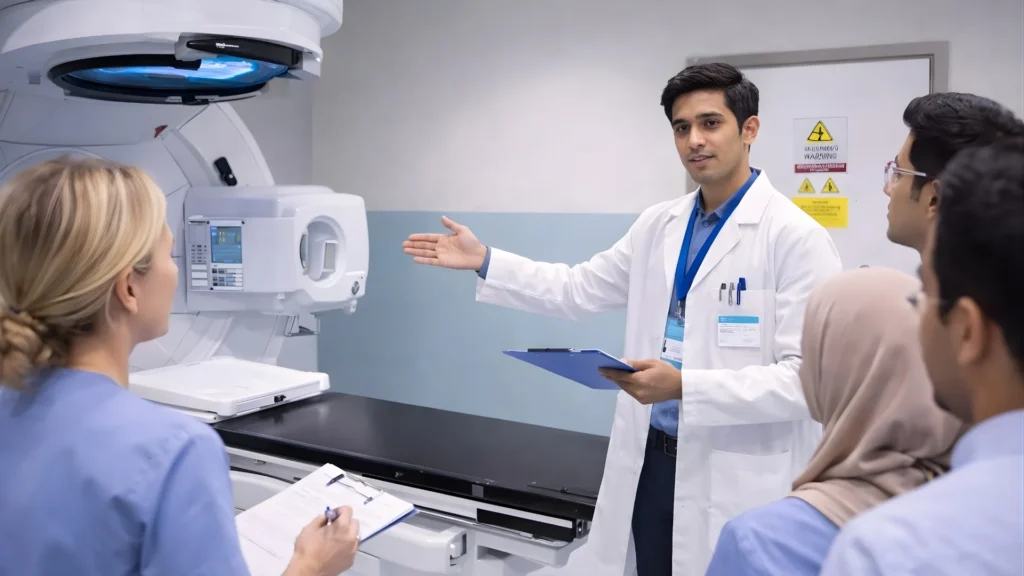
Medrad provides industry-recognized radiation protection officer training designed to meet UAE regulatory requirements.
Key advantages include:
Expert instructors with field experience
Training aligned with MOHAP, DOH, and FANR standards
Practical, compliance-focused curriculum
Certification suitable for regulatory submissions
Support for healthcare and industrial sectors
Yes. Facilities using radiation sources must appoint a trained and certified Radiation Protection Officer.
Training duration varies but typically ranges from a few days to several weeks, depending on the program.
Yes. When the training aligns with the UAE regulatory requirements.
Radiation protection officer training is a critical investment for professionals and organizations operating radiation equipment in the UAE. It ensures safety, compliance, and career growth while protecting public health and institutional credibility.
Choosing a trusted training provider ensures long-term regulatory success and professional advancement.